
Our former office in Kyiv was struck in a Russian attack in the days following the full-scale invasion in February 2022.
I received the image from a close friend and colleague. It’s hard to put into words what it feels like to see a place you know — a place tied to people, routines and everyday life — reduced to ruins.
Buildings can be rebuilt. But this was never just about a building.
What was lost
For our colleagues, it meant losing what little sense of normality they had managed to hold on to. Work had been one of the few stable parts of everyday life.
That disappeared overnight.
Some of the people we have worked with have, at times, been unreachable.
That’s the reality — and it’s heartbreaking
And still, they continue
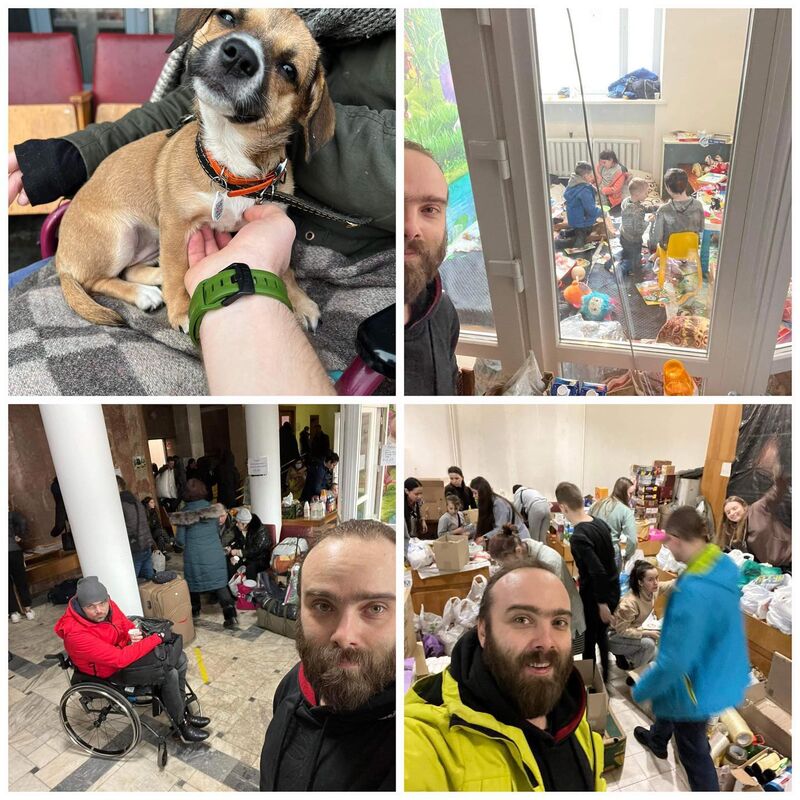
We see it every day. People adapting, checking in on each other, finding ways to keep going — helping where they can, showing up when it matters, even volunteering.
It’s hard to fully grasp from the outside.
But it stays with you.
What it changes
As a founder and leader, it changes how you think about responsibility — not in terms of product, delivery or growth, but people. Where they are, how they are, whether they are safe, and what you can actually do when so much is out of your control.
Because in moments like this, everything else just… stops. The business, the plans, the momentum. You’re reminded very quickly what actually matters.
We’ve tried to help where we can — offering relocation, support, alternatives — but it’s not simple. Some have said they’re used to this, that they’ve lived with it for a long time. That’s hard to process.
The unanswered questions
And it leaves you with questions you don’t really have answers to.
How long can this continue? How many times can people rebuild something that gets taken away again?
How many times can you start over — knowing it might happen again?
Ukraine is not just defending territory.
It’s defending something far more basic.
The idea that ordinary life should be possible. That people should be able to wake up, go to work, and return home safely.
Not distant
This is not far away.
It’s people we know. People we’ve worked with. People we care about.
People we’ve shared everyday moments with — conversations, work, small routines that suddenly mean everything.
That’s what makes it real.
What remains
We are incredibly proud of our colleagues in Ukraine.
Not just for continuing their work — but for the way they show up for each other, every single day.
We stand with you.
And we always will.
Related coverage: